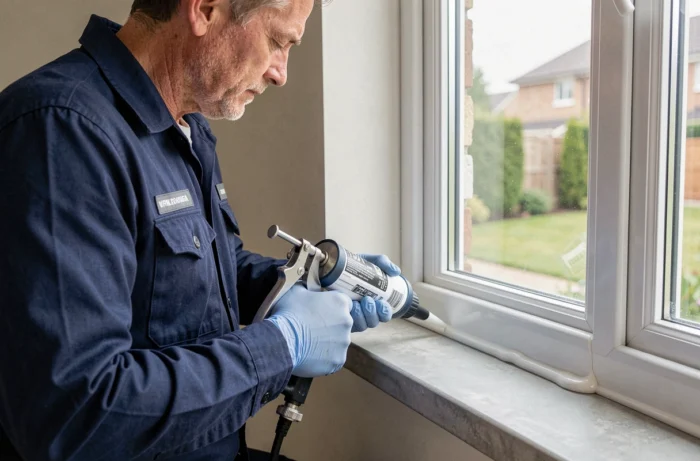
The seal between a PVC frame and the masonry serves three simultaneous functions: blocking water infiltration, limiting air passage, and absorbing micro-movements of the structure. Silicone and acrylic sealant meet these requirements in different ways, as their chemical composition gives them opposing mechanical behaviors in response to the stresses of an exterior joinery.
Neutral silicone and acrylic sealant: two chemistries, two behaviors on PVC
Neutral silicone polymerizes upon contact with ambient moisture, forming a flexible elastomer. This permanent flexibility allows it to follow the expansions of PVC without peeling or cracking. Acetic silicone, recognizable by its vinegar smell, adheres poorly to PVC and can attack certain materials: it should be avoided for joinery.
Acrylic sealant, on the other hand, dries by evaporating the water it contains. It hardens more than silicone and tolerates expansion movements less well. However, it can be sanded and painted, making it useful for visible interior finishes.
Choosing the silicone or sealant for PVC windows therefore primarily depends on the concerned side: exterior or interior, exposed to the elements or protected.
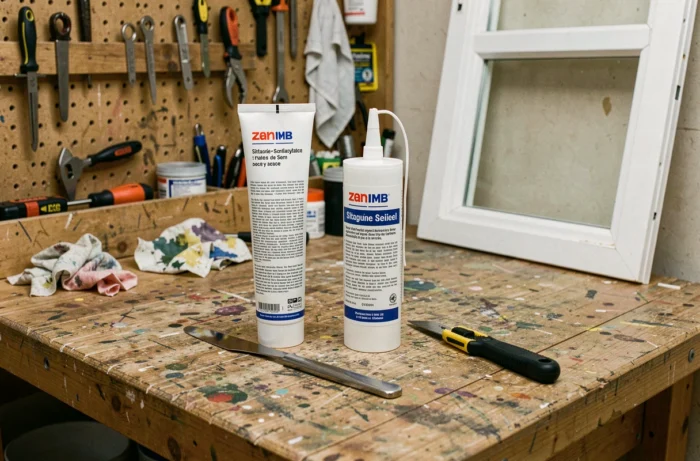
Exterior sealing of PVC windows: why neutral silicone dominates
On the exterior side, the seal is subjected to heavy rain, frost, UV rays, and significant temperature variations between summer and winter. Neutral silicone remains flexible under these conditions, whereas acrylic sealant eventually retracts and cracks after a few freeze-thaw cycles.
Water resistance is the other major difference. Silicone is naturally hydrophobic: it does not re-emulsify upon contact with rain, even prolonged. Acrylic, formulated with water, remains sensitive to moisture until it has completely dried, and its long-term performance in direct exposure decreases.
Case of hybrid sealant
Hybrid sealants (MS Polymer) combine the flexibility of silicone and the paintability of acrylic. They adhere well to PVC without a primer and offer superior UV resistance compared to acrylic. For colored PVC joinery where the seal needs to be painted to visually integrate, hybrid sealant represents a real technical compromise.
Interior side: when acrylic sealant takes the advantage
In interior finishing, the constraints change. The seal is not subjected to rain or UV. It must primarily contribute to air tightness and remain aesthetically pleasing.
Acrylic sealant smooths easily, accepts paint, and can be touched up. Silicone, on the other hand, cannot be painted and attracts dust on the surface. For a finishing seal between the PVC frame and the plasterboard lining, acrylic offers a cleaner and repairable finish.
However, caution is advised: in humid areas (bathroom, laundry room), neutral silicone remains preferable even on the interior side, because acrylic does not handle permanent moisture well and can develop mold more quickly.
Backing and multilayer logic: sealant alone is not enough
Practices compliant with NF DTU 36.5 emphasize a point that competitors rarely address: the sealant is just one layer in a sealing system. Expanding polyurethane foam alone is not recognized as a compliant sealing device. Accepted devices include extruded sealant on a backing, pre-compressed impregnated foam, and sealing membrane.
In practice, the logic is multilayer:
- On the interior side, an air barrier (membrane or acrylic sealant on a polyethylene foam backing)
- In the center, thermal insulation (pre-compressed foam or soft insulation)
- On the exterior side, rain protection (neutral silicone sealant on a backing, or pre-compressed impregnated foam)
Without a cylindrical backing to calibrate the thickness of the cord, the sealant or silicone adheres on three faces instead of two. It then loses its elongation capacity and cracks prematurely. This technical detail explains many joint repairs after only a few years.
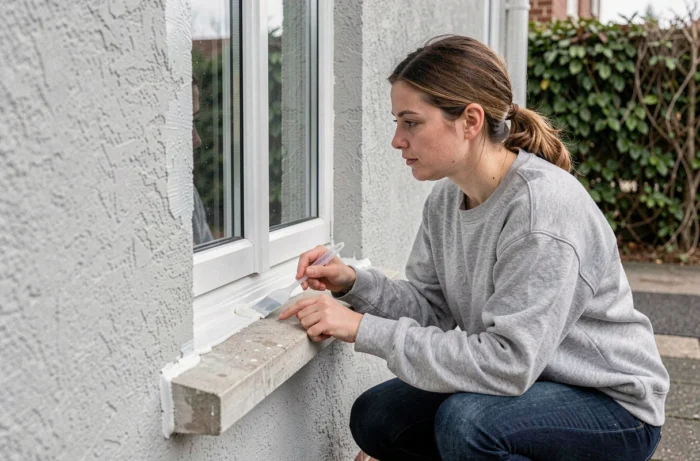
Quick choice criteria based on installation situation
Rather than a generic table, here are concrete decisions by situation:
- Exterior seal between PVC frame and facade coating: neutral silicone, applied on backing, with regular cord thickness
- Interior seal between frame and plasterboard lining, dry room: acrylic sealant, smoothed and painted after complete drying
- Interior seal in humid room: neutral silicone formulated with anti-mold properties
- Exterior seal to be painted (colored PVC, integrated shutter): hybrid MS Polymer sealant, compatible with PVC without primer
- Renovation of an old silicone seal: completely remove the old seal before reapplication, as new silicone does not adhere to contaminated old silicone
The ongoing revision of NF DTU 36.5 plans to integrate provisions for configurations with external thermal insulation (ITE), where sealing must be protected by a membrane. In these cases, the choice of finishing sealant becomes secondary to the overall design of the system.
The right reflex is to think in terms of systems rather than products: a quality neutral silicone applied without backing will last less long than a properly implemented acrylic sealant on a prepared substrate. The chemistry of the product matters, but the application method determines the actual durability of the seal.