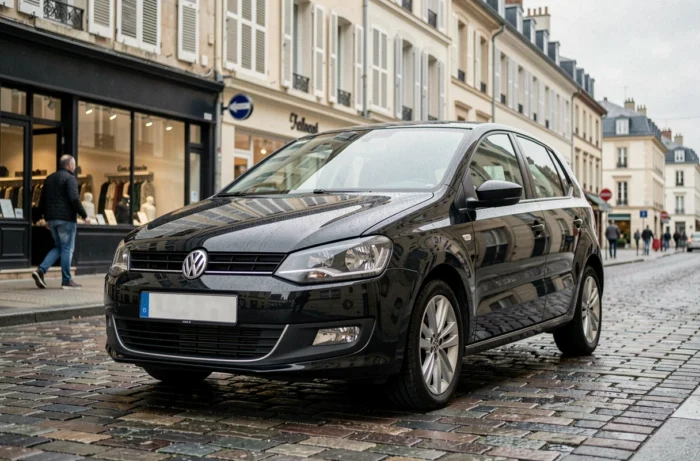
The Volkswagen Polo 6R is a city car produced between 2009 and 2017, appreciated for its compact size and versatility in daily use. Under this chassis code lie two distinct phases, with engine options and equipment levels that vary significantly from year to year. Understanding these differences allows for purchasing or maintaining a Polo 6R without unpleasant surprises.
Polo 6R phase 1 and phase 2: what changes under the hood
Have you ever noticed that two Polo 6Rs from different model years do not behave the same way? The reason lies in a facelift that occurred in 2014, which changed much more than just the bumpers.
The first phase (2009-2014) features TSI and MPI petrol engines as well as TDI diesels. The TSI petrol engines from this period rely on direct injection coupled with a turbo, while the MPI versions use a simpler multipoint injection. The transition to Euro 6 standards in 2014 redesigned the entire engine range.
In phase 2 (2014-2017), Volkswagen revised the engine maps, added a particulate filter to the diesels, and recalibrated the gearboxes. The French-speaking community that documents these developments on polo6r.fr lists the technical specifications of each engine, which helps to precisely identify a vehicle’s version.
In practice, a 1.2 TSI phase 1 and a 1.2 TSI phase 2 do not share the same wear parts or maintenance intervals. Checking the exact engine code (engraved on the block) prevents ordering incompatible filters or belts.
DSG or manual gearbox on the Polo 6R: a choice that affects maintenance
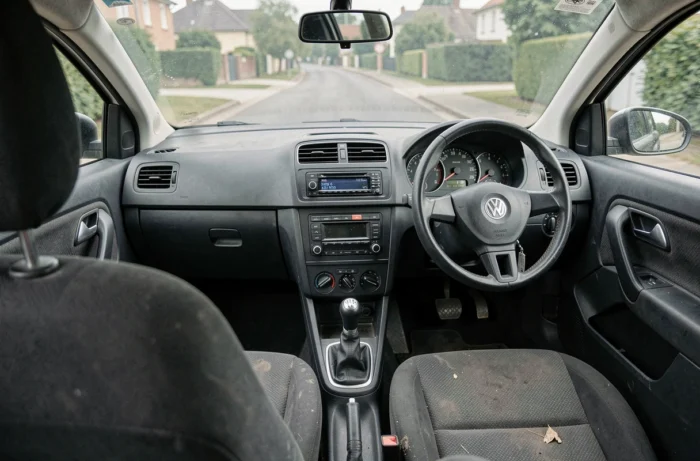
The Polo 6R was offered with a 5 or 6-speed manual gearbox depending on the engines, and with the famous DSG7 automated gearbox on certain versions. This technical choice has direct consequences on the maintenance budget.
The DSG7 gearbox requires regular oil changes. Neglecting this operation causes jolts, hesitant gear shifts, and eventually costly mechatronic failures. On a used city car, an incomplete maintenance record on this point should raise alarms.
The manual gearbox, on the other hand, is more forgiving. Its maintenance is limited to the classic replacement of transmission oil, which is less expensive and less frequent. For urban use with a lot of traffic jams, the DSG offers appreciated comfort, but one must anticipate the additional maintenance costs.
Guidelines for evaluating a used DSG7
- Request proof of the last DSG oil change (invoice or service book stamp) and check that the oil used corresponds to the manufacturer’s reference
- Test the vehicle cold: jolts at startup or hesitations between first and second gear indicate a tired mechatronic
- Listen for noises in reverse, as this is often where the first symptoms appear
Polo 6R GTI: a pocket rocket with its own constraints
The GTI version of the Polo 6R stands out with a 1.4 TSI twincharged engine (turbo and supercharger) in phase 1, later replaced by a 1.8 TSI in phase 2. These two engines have neither the same weaknesses nor the same wear parts.
The 1.4 TSI twincharged is a technically ambitious engine. The timing chain of this block has been subject to recalls due to a faulty tensioner. On a used unit, a rattling noise at cold start should immediately direct the diagnosis towards this chain.
The 1.8 TSI of phase 2, more conventional with its single turbo, offers generally better reliability in this regard. In return, its oil consumption may be higher in the earlier model years. Checking the oil level between oil changes remains necessary on this engine.
GTI braking and suspension
The GTI receives larger brake discs and a lowered chassis compared to the standard versions. Owners who use their Polo GTI on the track or for sporty driving should monitor the wear of the steering joints and suspension arm bushings, which are stressed well beyond the urban use intended by the manufacturer.
GSR2 regulation and the future of the Polo: why the 6R is gaining value
The European General Safety Regulation GSR2 (EU Regulation 2019/2144) requires since July 2024 a range of driver assistance systems on all new vehicles registered in the EU. Among them: intelligent speed assistance, distraction warning, advanced emergency braking, and event data recorder.
A strengthened phase of these obligations comes into effect from July 2026. These requirements partly explain why Volkswagen is steering the next generation (the future electric ID.Polo, on the MEB+ platform) towards a much higher level of electronic equipment than the current thermal Polos.
For Polo 6R owners, this evolution has an indirect effect. Compact thermal city cars, mechanically simple and easy to maintain, are gradually becoming rare in the new car market. A well-maintained Polo 6R, with a clear history and a reliable engine, therefore retains a concrete appeal for those looking for a car for use without excessive electronics.
The design gap between a 2012 6R and a new city car from 2026 is not measured solely in power or consumption. It is mainly reflected in the complexity of the embedded systems and the associated repair costs. Keeping your Polo 6R in good condition, documenting its maintenance, and anticipating the wear parts specific to its engine remains the best way to preserve its value in a tightening used car market.