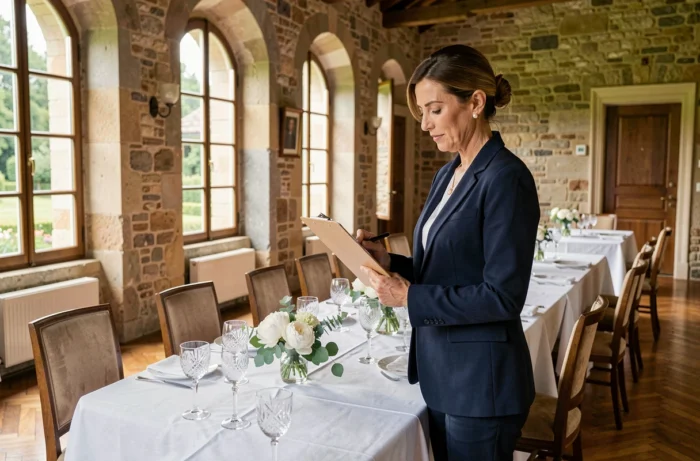
Organizing a private party in France is not just about choosing a date and sending out invitations. The venue, the regulatory framework, the sound atmosphere, and the pace of the evening determine the difference between a quickly forgotten event and a memorable moment. Here are the concrete angles to master to achieve this.
Noise disturbances and private events: what the law requires since 2024
Before thinking about decoration or playlist, an organizer must know the legal framework regarding noise. The law n°2024-346 of April 15, 2024 has included abnormal neighborhood disturbance in the Civil Code, in article 1253. The consequence is direct: the organizer’s liability can be engaged without the need for a measuring device.
Noisy disturbances are characterized between 10 PM and 7 AM. It is enough for the noise to be audible to a neighbor for a sanction to be imposed. The fixed fine amounts to 135 euros, which can reach 375 to 450 euros in case of an increase or prosecution before the court.
For amplified music, decree n°2017-1244 of August 7, 2017, remains in effect. It sets precise thresholds that also apply to privatized venues for events. In practice, if you rent a domain or a castle for a party, these obligations concern you just as much as the usual operator.
Here are some precautions to integrate from the planning stage:
- Notify neighbors in writing at least one week in advance, specifying the end times for amplified music
- Orient speakers towards the interior of the property or venue, never towards neighboring homes
- Schedule a transition to acoustic music or reduced volume starting at midnight, even if the party continues
These precautions are not mere formalities. They protect against a neighbor’s claim based on strict liability, where goodwill is not enough as a defense.

Private event venue in France: choose based on experience, not capacity
You may have noticed that a wedding in a large estate can feel empty with too few guests, while a well-furnished courtyard creates an immediate atmosphere? The first instinct is often to look for a venue large enough to accommodate everyone. The right instinct is to start from the desired ambiance.
An intimate setting (enclosed garden, vaulted room, barge) works better for groups of a few dozen people. Interactions are more natural, sound management is simpler, and decoration costs decrease since the space is self-sufficient. Specialized providers in private events, like those listed on so-mauricette.fr, offer packages tailored to these formats where every detail matters more than the surface area.
For a larger event (family reunion, milestone birthday), a vineyard or a castle offers versatile grounds. Why this choice? Because these venues often have usable indoor and outdoor spaces depending on the weather, avoiding an improvised plan B under a flimsy tent.
Concrete criteria to check before signing
- The noise clause in the rental contract: some venues impose a sound curfew at 11 PM, others at 1 AM. Check before booking a DJ
- Access for service providers (caterer, equipment rental): an unpassable dirt road for a refrigerated truck can ruin logistics
- The presence or absence of a caretaker or manager on site, capable of handling a technical incident at night
- Cancellation conditions in case of bad weather, a point often overlooked that becomes critical for outdoor events
Pacing and flow of the evening: avoid the mid-event lull
A successful private event follows a three-part rhythm, without the guests being aware of it. The first part, the welcome, lasts between thirty and forty-five minutes. This is the time for cocktails, reunions, and photos. The second part is the meal or main activity. The third is the festive or relaxation phase.
The classic trap lies between the second and third parts. Speeches drag on, the DJ delays starting the music, or guests don’t know where to go. This lull in rhythm empties the dance floor and encourages early departures.
To avoid it, plan for an active transition. A simple example: serving roaming desserts while the sound system is being set up, or a short group game (family quiz, photo slideshow) that reignites the group’s energy. The transition between meal and party should last no longer than fifteen minutes.
Adapting the flow to the guests’ profile
A thirty-year birthday and a multigenerational family party do not follow the same tempo. In the latter case, offering a quiet space away (living room, library, covered terrace) allows older guests to stay without enduring the noise level. This detail, rarely mentioned in event schedules, makes the difference between a departure at 10 PM and staying until midnight.
Budget for a private event: underestimated items
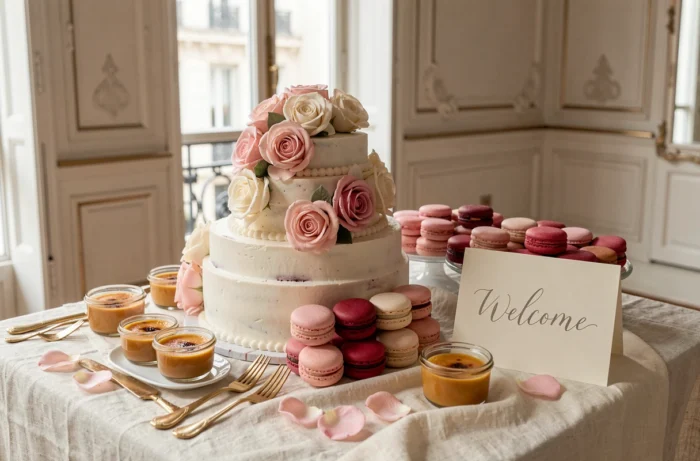
The caterer and venue rental attract the most attention. Cost overruns come from elsewhere. Professional sound systems, signage to guide guests in a large estate, post-event cleaning fees, and the damage deposit required by some venues increase the final bill.
Plan for a buffer of at least one-tenth of the initial budget for these unforeseen expenses. Organizers who finalize their budget to the exact cent often end up cutting back on lighting or logistics, two invisible yet crucial items for the overall ambiance.
One last often-overlooked point: waste management. Some municipalities impose specific sorting for events exceeding a certain number of guests. Check with the town hall of the venue before the big day, or risk incurring cleanup fees charged by the owner.