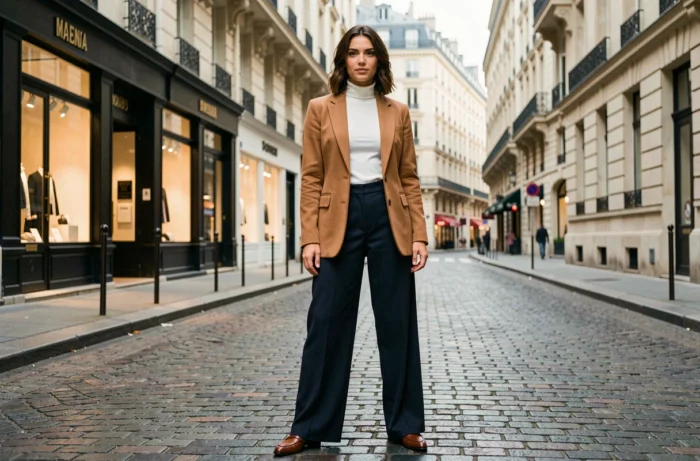
The French clothing market is going through a period of contraction. Purchases of new clothes are declining in value and volume compared to previous years, with a level that remains below that of pre-Covid. Pressure on purchasing power, milder weather reducing seasonal needs, and the rise of second-hand: fashion trends are no longer just a list of colors or cuts to copy. They reflect a change in the relationship with clothing.
Reduced wardrobe and versatile pieces: the real fashion shift
The continued decline in purchase volumes in France is pushing towards a logic of rationalization. Buying less, but buying pieces that work in multiple contexts (office, weekend, outing) is becoming a reflex rather than a marketing discourse.
This shift has concrete consequences on what sells. Clothes too marked by a micro-trend are losing attractiveness. Straight cuts, fabrics that wrinkle little, and neutral but textured colors are gaining ground because they respond to a simple calculation: one piece worn twenty times is better than five worn three times.
To follow this approach through the seasons, the fashion category of Espace Forme et Beauté offers useful references on pieces that transcend trends without going out of style in a few weeks.
The blazer exemplifies this versatility well. Worn over straight jeans or fluid trousers, it effortlessly structures a silhouette. Slightly textured fabrics (fine tweed, blended wool) give it a depth that a classic suit blazer did not offer. This piece is not new, but its everyday use has become normalized.
Second-hand and everyday style: Vinted the top clothing seller in France
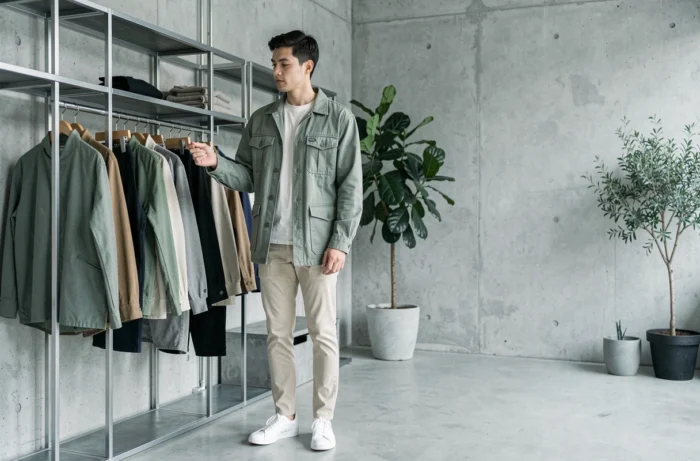
Vinted has become the top clothing seller in France by transaction volume, ahead of players like Amazon or Kiabi. This shift no longer concerns a niche segment or a militant approach. Second-hand has established itself as the main purchasing channel for a growing share of consumers.
The motivation remains primarily economic. Nearly four out of five second-hand buyers say they do so to save money, with ecological sensitivity coming as a complement. The platform surpassed the one billion euros in revenue in 2025, making its model profitable.
What changes for everyday style is access to pieces that would not have been feasible at the price of new. A well-made wool coat, a pair of full-grain leather shoes, a structured bag: second-hand allows for upgrading key pieces without blowing a budget.
What second-hand changes in building a style
Buying second-hand requires more careful sorting. Filters by size, brand, or condition force one to define what they are looking for before browsing, whereas a fast fashion site encourages impulsive buying through the volume of new arrivals.
Field reports diverge on this point: some users describe a time-saving benefit, while others experience a form of fatigue related to the search. The quality of photos and descriptions varies greatly from seller to seller, complicating the assessment of materials and finishes from a distance.
European textile regulation: what will weigh on your choices
The European regulatory framework is tightening around the sustainability of clothing. The European regulation on eco-design, currently being deployed, will impose minimum durability and reparability requirements on textile products for manufacturers. In practical terms, clothing placed on the market will have to meet measurable technical criteria.
At the same time, the AGEC law in France already prohibits the destruction of unsold non-food items, including textiles. Brands are required to donate, reuse, or recycle their remaining stocks. This constraint is changing production strategies:
- Shorter and better-calibrated collections are gradually replacing mass launches to limit surpluses
- Environmental labeling, planned for the future, should allow for comparing the ecological impact of two similar garments directly on the shelf or online
- Brands investing in reparability (reinforced seams, spare parts, extra buttons provided) are beginning to make it a concrete selling point
These regulatory obligations will gradually change the available supply. For consumers, this means potentially more expensive clothing per unit, but designed to last longer. The available data does not yet allow for measuring the real impact on retail prices, with the first effects expected in the coming years.
Style assistance tools and recommendations through artificial intelligence
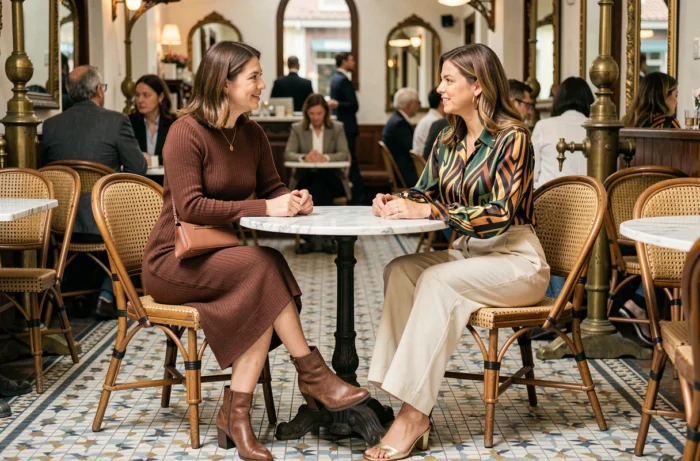
Several platforms now integrate clothing recommendation features based on artificial intelligence. The principle: analyze declared preferences or purchasing behavior to suggest piece combinations or alternatives consistent with an existing wardrobe.
Some solutions go further. Startups like uStyle (based in Turin) or Clossie (launched by Trenfit) offer to recreate the in-store stylist experience online, with personalized suggestions based on photos or morphology descriptions. A British player, THG, reports that customers using its AI styling tool are six times more likely to convert than other visitors.
The limitations remain tangible. These tools work better on standardized clothing (regular sizes, classic cuts) than on atypical or vintage pieces. The relevance of the suggestions heavily depends on the database feeding the algorithm, and field feedback varies on the ability of these systems to capture a personal style beyond statistically popular combinations.
- Automated recommendations can help break out of a clothing routine by suggesting unexpected combinations
- They remain a starting point, not a substitute for personal choice, especially for pieces that structure a silhouette (jacket, shoes, bag)
- The issue of the privacy of body data shared with these platforms deserves attention, as protection frameworks vary by hosting country
Everyday style is now built at the intersection of budgetary, regulatory, and technological constraints. Optimizing an existing wardrobe rather than renewing it every season is no longer just an ethical choice; it is a pragmatic response to a changing market. The tools are changing, purchasing channels are diversifying, but the principle remains the same: know your real needs before following a trend.