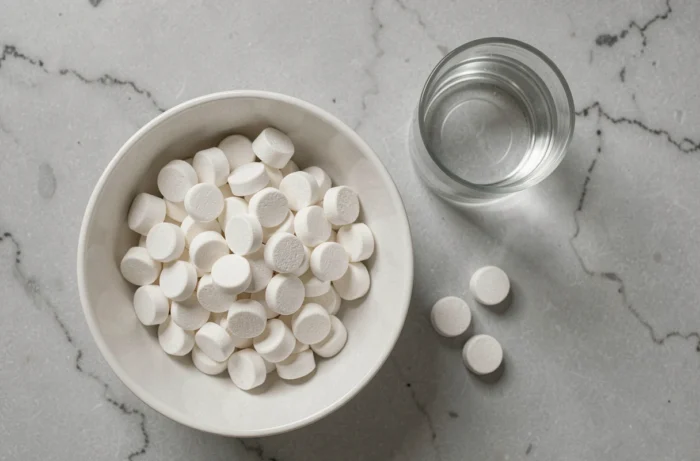
One bites into a Vichy pastille after a heavy meal, reflexively, without too many questions. The menthol flavor is pleasant, the dissolution is quick, and one leaves with a feeling of digestive freshness. But behind this familiar candy lie precise mechanisms related to sodium bicarbonate and the mineral salts from Vichy waters, which deserve attention before making it a daily habit.
Polyols in sugar-free Vichy pastilles: what the digestive tract endures
When choosing the sugar-free version, one avoids regular sugar but ingests polyols (isomalt, maltitol, sorbitol). These sweeteners replace sucrose and have a lower glycemic index. The problem is that they ferment in the colon.
In practice, three or four sugar-free pastilles in the afternoon pass without issue for most people. Beyond that, responses vary: some report bloating after the second pastille, while others tolerate half a box without discomfort. Individual intestinal sensitivity plays a decisive role.
Polyols cause water to be drawn into the intestine through osmotic effect. The result: bloating, cramps, and osmotic diarrhea if the amount exceeds personal tolerance levels. Children and those suffering from irritable bowel syndrome are the most affected. To learn everything about Vichy pastilles and their unwanted digestive effects, it’s best to understand these mechanisms before opening the box.
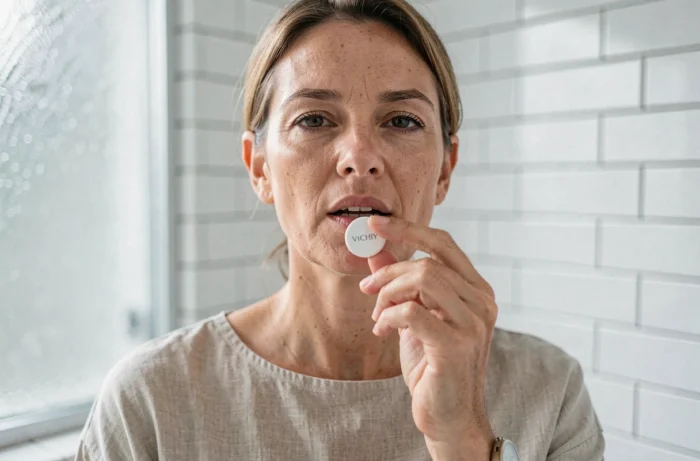
Sodium bicarbonate and gastric acidity: the real mechanism of Vichy pastilles
Sodium bicarbonate is the active ingredient that gives the pastilles their digestive reputation. It reacts with hydrochloric acid in the stomach to form sodium chloride, water, and carbon dioxide. This reaction temporarily neutralizes excess acidity.
One experiences quick relief from heartburn and acid reflux. The effect is real but brief: it lasts only as long as the chemical reaction, not for several hours.
Limits of bicarbonate with repeated use
Regular and excessive consumption of sodium bicarbonate can disrupt the acid-base balance. The stomach, faced with frequent neutralization, tends to produce more acid to compensate, a phenomenon known as acid rebound effect. This results in a counterproductive cycle: the more pastilles one takes to calm acidity, the more the stomach produces.
Bicarbonate also adds sodium. For those monitoring their salt intake (hypertension, kidney failure, low-sodium diet), this detail is significant. A few pastilles a day add a dose of sodium that, when combined with regular food intake, can pose a real problem.
- Occasional heartburn after a hearty meal: two to three pastilles provide effective relief, as long as it doesn’t become a daily routine.
- Hypertension or low-sodium diet: it’s best to consult a doctor or pharmacist before any regular consumption.
- Ongoing medication treatment: bicarbonate alters gastric pH and can affect the absorption of certain orally taken medications.
Mineral salts from Vichy waters: a real or anecdotal contribution
The pastilles are made from the mineral waters of the Vichy spa. They contain calcium, magnesium, potassium, and fluoride. The legitimate question is: does biting into a pastille provide a significant amount of minerals?
The mineral contribution per pastille remains low compared to daily needs. One does not compensate for a magnesium deficiency with a box of candies. The mineral salts present contribute more to the characteristic taste (that recognizable slight saltiness) than to serious nutritional supplementation.
Where these minerals have practical interest is in their complementarity with bicarbonate for gastric buffering effect. The mixture of alkaline salts slightly enhances the neutralization capacity. We remain in the realm of occasional digestive comfort, not dietary supplementation.
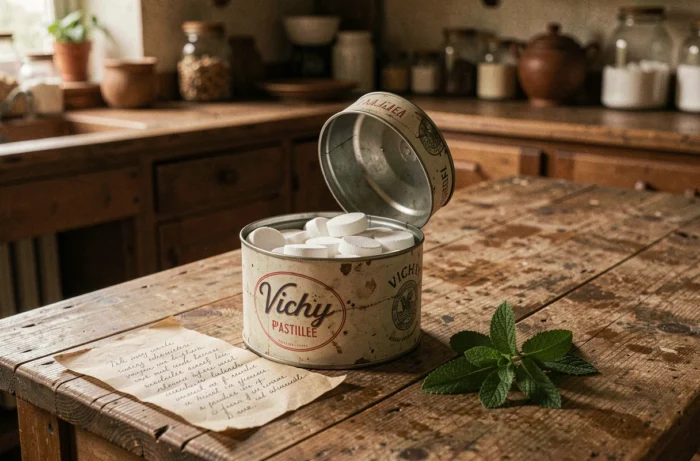
Vichy pastilles daily: reasonable usage framework
We are not talking about a medicine, but neither are we discussing a trivial candy. This distinction matters. The presence of sodium bicarbonate and active mineral salts places Vichy pastilles in an intermediate zone between candy and a product with physiological effects.
Classic version or sugar-free version: which to choose
The classic version contains sugar, thus calories. For occasional consumption after a meal, the caloric difference is not significant. However, if consumed several times a day, the sugar accumulates.
The sugar-free version avoids this problem but introduces polyols. The choice depends on the digestive profile: for a sensitive intestine, the classic version in small amounts is preferred. For weight monitoring or diabetes, one should opt for the sugar-free version while remaining attentive to digestive signals.
Concrete guidelines to avoid exceeding limits
- After a rich or spicy meal, two to three pastilles are sufficient for satisfactory antacid effect.
- Space out the doses: no continuous consumption throughout the day, to avoid acid rebound effect and sodium overload.
- Do not use the pastilles as a substitute for prescribed treatment for chronic gastroesophageal reflux: they mask the symptom without addressing the cause.
- In children, limit the amount of sugar-free pastilles to prevent digestive issues related to polyols.
Vichy pastilles maintain their place in the pocket or desk drawer as an occasional digestive aid. Their composition based on bicarbonate and mineral salts from thermal waters produces a real effect on gastric acidity, provided this occasional gesture does not become an automatic habit. The pleasure of fresh mint at the end of a meal should not mask a digestive discomfort that deserves a proper diagnosis.