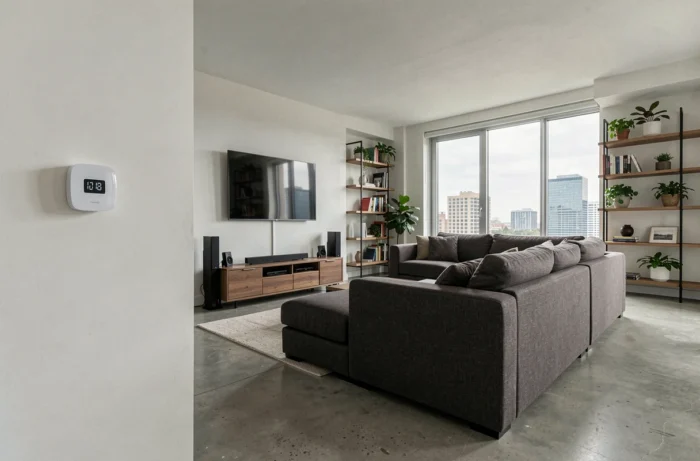
Properly heating a home, ventilating it, and being able to see clearly in the evening without squinting: these basic functions define comfort long before the choice of a sofa or the color of the walls. In recent years, French regulations have linked the concept of a comfortable home to measurable energy performance criteria, rather than just visual appeal. Understanding which equipment truly matters allows for investment in the right areas, without wasting budget or energy.
Energy performance: the legal foundation of comfort in 2024
Have you ever noticed that a home can be beautifully furnished yet still feel cold in winter? The law has resolved this paradox. Since January 1, 2023, a home whose final energy consumption exceeds 450 kWh/m² per year is legally deemed indecent and can no longer be rented out, even if its interior layout is impeccable.
This threshold has concrete consequences on the choice of equipment. A cheap electric heater may suffice to warm a room, but it skyrockets energy consumption. Conversely, proper insulation of walls and roofs reduces the heating demand at the source. Therefore, the most cost-effective equipment in a house is not always visible: it is often the insulation placed behind the walls.
Homes classified as G in the energy performance diagnosis have gradually been removed from the rental market since 2025. Those classified as F will follow in 2028, and E in 2034. This trajectory means that a homeowner renovating today has every interest in prioritizing insulation and heating before decoration, or risk seeing their property become non-compliant in a few years.
To delve deeper into the list of installations to consider room by room, you can learn more on Be At Home, which details the essential elements not to overlook when moving in or renovating.

Heating and ventilation: the duo that changes everything
Talking about heating without mentioning ventilation is like filling a bathtub without checking that the drain is closed. The two systems work together.
Choosing a heating method suitable for the construction
An old house with thick stone walls does not react like a modern wooden frame construction. In the former case, an inertia system (cast iron radiators, low-temperature underfloor heating) utilizes the thermal mass of the walls. In the latter, an air-water heat pump paired with low-temperature emitters offers good efficiency.
Heating represents the primary energy consumption of a house. Before comparing radiator brands, check the level of insulation. A poorly insulated home turns any efficient system into a financial sinkhole.
Ventilation: often underestimated equipment
A properly sized mechanical ventilation system (VMC) removes humidity, indoor pollutants, and CO2. Without it, mold settles in, allergies multiply, and air quality quickly declines.
- The single-flow VMC extracts stale air from humid rooms (kitchen, bathroom) and allows fresh air to enter through vents in dry rooms.
- The double-flow VMC recovers heat from outgoing air to preheat incoming air, significantly reducing thermal losses in winter.
- Annual maintenance (cleaning vents, checking the motor) is sufficient to maintain nominal airflow. Without this maintenance, the system loses efficiency each year.
A faulty ventilation system degrades the home faster than insufficient heating. Humidity attacks woodwork, seals, and even the structure in the long term.
Lighting and electrical equipment: everyday comfort
Lighting directly influences the perception of comfort in each room. A living room bathed in cold, harsh light strains the eyes. A poorly lit kitchen makes meal preparation tedious.
The principle is simple: adapt the color temperature to the use of each space. Workspaces (kitchen, office) benefit from neutral or slightly cool lighting. Rest areas (bedroom, living room) call for warm light, around 2,700 kelvins.
Beyond lighting, the electrical network itself is part of the basic equipment. A compliant electrical panel, a sufficient number of outlets per room, and an appropriate residual current device are criteria for the decency of a home. An undersized circuit causes frequent outages and poses a real safety risk.
Safety and water: equipment that gets forgotten until it’s missing
Some equipment is only used in case of problems, which explains why they are neglected. However, they remain among the most important.
- A smoke detector (mandatory since 2015 in all homes) costs a few euros and saves lives. Check its battery once a year.
- An accessible shut-off valve on each water supply allows for quick shutoff in case of a leak, without waiting for a plumber.
- A properly sized water heater prevents a shortage of hot water during peak hours. A tank too small for the number of occupants generates daily discomfort often underestimated at the time of purchase.
- A fire extinguisher in the kitchen is not mandatory for individuals, but its low cost makes it relevant in any home equipped with a gas stove.
Hot water, drinking water, and functional indoor sanitation are part of the legal criteria for the decency of a home. A home lacking these elements cannot be rented, regardless of the quality of its layout otherwise.
Prioritizing the right investment areas
The temptation is strong to allocate the budget to what is visible: paint, furniture, decorative lighting. These choices matter for aesthetics, but invisible equipment determines real long-term comfort. Effective insulation, suitable heating, maintained ventilation, and a compliant electrical network form the foundation of a home where one lives well, summer and winter.
Starting with these technical aspects before moving on to decoration remains the most reliable method to avoid unpleasant surprises, whether it be an excessive energy bill or a property reclassified as non-compliant during a future diagnosis.